How to Start a Journaling Tradition in Your Ward
Benjamin S. Fowler
Maker & Founder, Covenant Leather Co. · March 18, 2026 · 6 min read
President Henry B. Eyring once said he made a habit of writing down, every day, how he had seen the hand of God in his life. He said that as he wrote, his ability to recognize God's influence increased. The act of recording didn't just preserve what had already happened — it sharpened his ability to see what was happening.
That's not just good counsel. It's a principle that can transform a ward.
I saw it in my own ward in Saratoga Springs. What started as giving journals to missionaries became something broader — a culture where people expected to write things down, where testimonies had specific dates and names attached to them, where the youth understood that their spiritual experiences were worth recording.
Here's how it happened, and how you can do it in your ward.
Start with the Missionaries
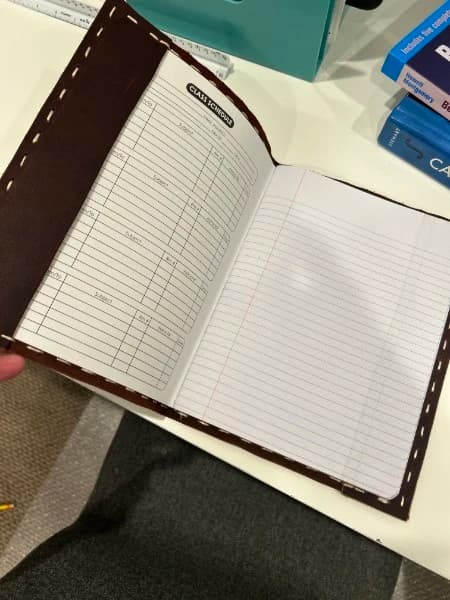
The simplest entry point is the one I started with: give every departing missionary a journal. Not a cheap one — something they'll feel accountable to use.
Present it personally. Write a note on the first page. Tell them you expect a full journal when they come home. (You're mostly joking. But they'll remember it.)
This one act sends a message to the whole ward: we take recording seriously here.
Invite the Young Men and Young Women
The next step is the youth. And the key insight is this: don't tell them to journal. Show them why.
Invite a returned missionary — someone the youth know and look up to — to share one specific journal entry in a fireside or combined activity. Not a polished talk. A specific, dated entry. The rawness of it, the handwriting, the honesty of what they wrote on a random Tuesday in the field — that's more persuasive than any instruction to "keep a journal."
Then give each of the youth a journal. Not necessarily leather — even a quality hardbound notebook works. But something that feels intentional, not disposable.
Pair it with a simple challenge: write one thing you felt the Spirit today, every day for thirty days. That's it. One line. One thing.
Make It Part of Relief Society and Elders Quorum
Adults need permission to start journaling just as much as youth do. Many adults want to journal but feel like they've missed the window — that it's too late, that their life isn't interesting enough, that they don't know what to write.
A simple lesson or activity can break that down:
- Share President Eyring's counsel and invite members to try his approach: each day, write how you saw God's hand in your life.
- Spend ten minutes writing in class. Not talking about writing. Actually writing. Silence, pens, paper. It's uncomfortable for about ninety seconds. Then something shifts.
- Invite someone to share one journal entry from their life — a prayer that was answered, a day that was hard, a moment of clarity. The specificity of a journal entry is what makes it powerful.
Tie It to Temple and Family History Work
Here's the connection that most people miss: personal journals are family history. They are the primary source documents that future generations will use to understand who we were.
When we talk about family history, we usually mean looking backward — finding names, doing ordinances. But family history also runs forward. Your journal is the family history record that your grandchildren will search for.
Frame journaling this way and it stops being a self-improvement project. It becomes a sacred responsibility — the same instinct that drove Nephi to keep a record, Mormon to compile one, and Joseph to ensure everything was written down.
For Bishops: The Leadership Angle
As a bishop, you see things no one else in the ward sees. The family struggling quietly. The young man who almost didn't go on a mission but did. The woman who came back to church after fifteen years away.
You can't share these stories publicly. But you can write them in your own journal. And in doing so, you create a record of ministry that will anchor you when the calling feels heavy.
I kept a bishop's journal — not an official record, just a personal one. I wrote about the interviews that moved me, the blessings that surprised me, the moments when I felt the Lord guiding a conversation I didn't know how to have.
That journal is one of the most sacred things I own. Not because of what I wrote, but because of what it reminds me: that the Lord was there, even on the days when I wasn't sure.
The Long-Term Vision
A ward that journals is a ward that remembers. Members who write down their spiritual experiences develop stronger, more specific testimonies. Youth who learn to journal before a mission carry the habit into the field. Families who keep records create a heritage that endures beyond any single generation.
It doesn't happen overnight. It starts with one journal, given to one missionary, with a handwritten note on the first page. And it grows from there.
Handmade by Benjamin S. Fowler
Find the journal that's yours.
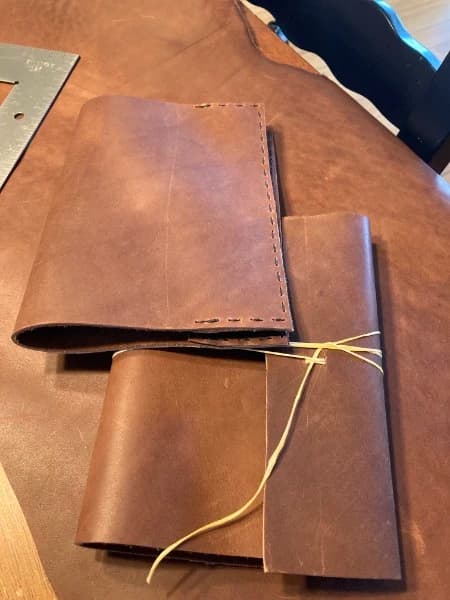
Every journal is made by hand in Saratoga Springs, Utah — genuine leather, waxed linen thread, and acid-free paper.
Shop Journals