A Letter to the Bishop Sending Missionaries
Benjamin S. Fowler
Maker & Founder, Covenant Leather Co. · March 28, 2026 · 7 min read
I know what it feels like to sit across from a nineteen-year-old who just got their call. The nervousness that tries to look like confidence. The parents behind them who are barely holding it together. The weight of knowing that you — their bishop — are the last shepherd they'll have before they walk into something enormous.
I served as a bishop in Saratoga Springs, Utah. Over the years, I sent out a lot of missionaries. And somewhere in those early farewells, I started a tradition that changed how I thought about my calling.
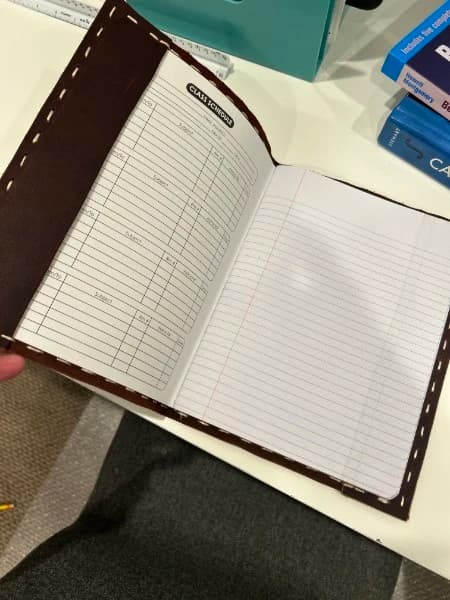
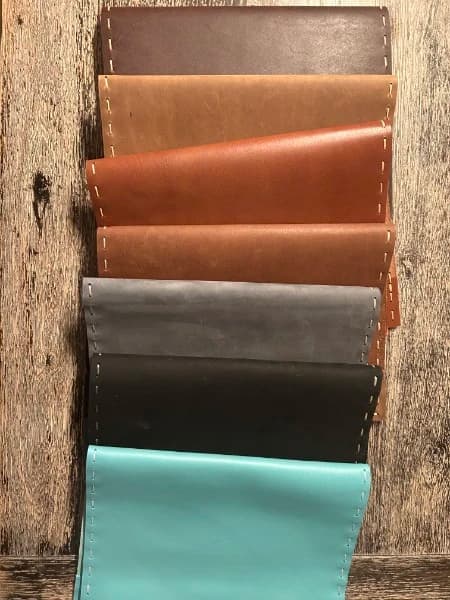
I gave every missionary a handmade leather journal.
Why a Journal and Not Just Words
Bishops say a lot of good things. We set apart. We bless. We counsel. And most of it — if we're honest — gets absorbed into the blur of everything else happening that week.
But a physical object persists. A journal with their name on it, placed in their hands the Sunday before they leave, says something that words spoken over a pulpit cannot: I see you. What you're about to do matters. Record it.
It also says something else, quieter: You will want to remember this. I'm making sure you can.
What I Wrote Inside
On the first page of every journal I gave, I wrote a short note by hand. Not a sermon. Not a scripture chain. Just a few honest sentences.
Something like:
Elder [Name] — You're ready for this. Write everything down. The hard days, the ordinary days, the days when the Spirit shows up and you can barely speak. Decades from now, this journal will be proof that you did something extraordinary when you were young. I'm proud of you. — Bishop Fowler
That note takes two minutes to write. I've had returned missionaries tell me, years later, that they read it on their hardest day in the field.
The Practical Case for Giving Journals
Many missionaries intend to journal. Most don't bring anything worth writing in. They end up with a spiral notebook from the grocery store that falls apart by transfer three, and they quietly stop writing.
A quality journal — leather, well-bound, with good paper — removes the friction. It feels like something worth opening. It survives the bag, the humidity, the two years of daily handling. And because it was given to them by someone who matters, they feel a quiet accountability to use it.
This is practical ministry. It costs less than a set of scriptures and lasts longer than a talk.
How to Make It a Ward Tradition
If you want to make journal-giving a tradition in your ward, here's what worked for me:
- Present it in the farewell interview, not over the pulpit. Keep it personal. Just you and them (and maybe parents). Hand it to them directly.
- Write the first-page note by hand. Don't print it. Don't type it. Your handwriting is part of the gift. It doesn't need to be neat.
- Tell them why. Say: "I want you to come home with a record. Not for me — for you, and for the people you'll teach someday about what a mission really is."
- Include a simple prompt if you want: "Each night, write one person, one lesson, one gratitude." That's enough to get the habit started.
What Comes Home
Here is what I've learned from the other side — from the missionaries who came home and sat in my office again, older now, different.
The ones who journaled could tell me specific stories. Names of people they taught. The street where they had a conversation that changed them. The companion who said the thing they needed to hear. Their memories had edges. They were specific.
The ones who didn't journal remembered in generalities. "It was great." "I learned a lot." "It was hard sometimes." True, all of it. But the details were already fading.
A journal doesn't just preserve a mission. It deepens it. The act of writing at the end of every day — selecting what mattered, putting language around experience — is how a mission becomes yours.
To Every Bishop Reading This
You have an extraordinary opportunity. The missionaries you send out will remember you. They'll remember what you said, how you made them feel, and what you put in their hands.
Give them something that will still be on their shelf when their own children ask, "What was your mission like?" Give them something they can open and say, "Let me read you what I wrote."
That's the gift. Not the leather. The record inside it.
Handmade by Benjamin S. Fowler
Find the journal that's yours.
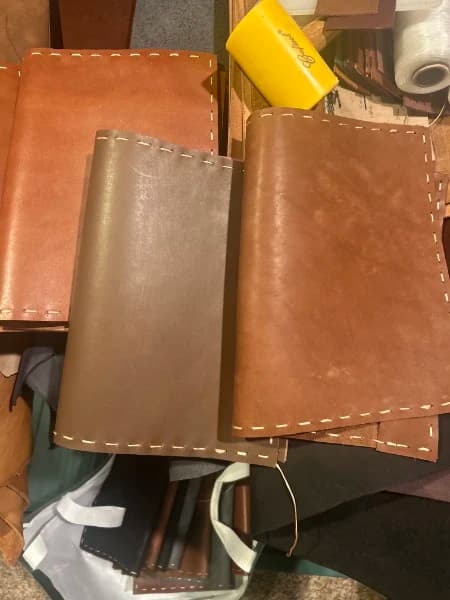
Every journal is made by hand in Saratoga Springs, Utah — genuine leather, waxed linen thread, and acid-free paper.
Shop Journals