What Your Mission Journal Will Mean in 20 Years
Benjamin S. Fowler
Maker & Founder, Covenant Leather Co. · March 22, 2026 · 6 min read
When you're on your mission, the journal feels like homework. One more thing to do at the end of a long day, when your legs ache and your companion is already asleep and the light in the apartment is bad.
You think: I'll remember this. I don't need to write it down.
You're wrong. And I say that with love, because I've sat across from enough returned missionaries to know what happens to the ones who write and the ones who don't.
What You Forget
The human brain is ruthless about forgetting. Not the big moments — you'll remember your baptisms, your hardest companion, the day you got transferred to the area that changed you. Those stay.
What disappears is everything else. The texture. The weather that day. The name of the woman who fed you lunch every Thursday. The way the light looked on the river you crossed every morning. The joke your companion told that made you laugh until you cried during companion study.
These are not minor details. They are the substance of your mission. And they are the first things to go.
Within five years of coming home, most returned missionaries can summarize their entire mission in about fifteen minutes. Two years of the most intense experience of their life — compressed into a quarter hour. Not because the mission was small, but because the memory has eroded to its outlines.
What the Journal Preserves
A journal doesn't just preserve facts. It preserves who you were.
Open a mission journal from twenty years ago and you'll meet someone you barely recognize — someone with a faith that was raw and urgent and uncomplicated. Someone who prayed with a desperation you've since learned to moderate. Someone who believed things could change in a single conversation, because they'd seen it happen.
That person is you. And without the journal, you might forget they ever existed.
I've watched grown men — fathers, professionals, men who haven't cried in years — sit and read their mission journals with tears running down their faces. Not because the memories are sad. Because they're real. Because they'd forgotten how much they felt, how much they cared, how alive they were in those two years.
What You'll Read to Your Children
One day — maybe sooner than you think — a child will ask you about your mission. They'll ask because they're about to go, or because they're deciding whether to go, or because they just want to know who you were before you were their parent.
If you have a journal, you can hand it to them. You can say: "Read this entry. This was the day I knew." Or: "This was the hardest week. Read what I wrote — you'll see that hard doesn't mean wrong."
If you don't have a journal, you'll tell them stories. Good stories. But stories that have been polished by time, smoothed of their edges, stripped of the details that would have made them believable to a nervous eighteen-year-old.
A journal entry written on the day it happened carries an authority that a memory retold twenty years later simply does not.
What Returned Missionaries Actually Say
I've asked dozens of returned missionaries — five years out, ten years out, twenty years out — the same question: "What do you wish you'd done differently?"
The number one answer, ahead of language study, ahead of working harder, ahead of being kinder to companions: "I wish I'd written more."
Every single one. The ones who journaled say they wish they'd written more detail. The ones who didn't journal say it's their biggest regret.
Not their biggest mission regret. Their biggest regret.
It's Not Too Late — And It's Not Too Early
If you're a missionary reading this right now, tonight is the night. Open the journal. Write the date. Write one sentence about what happened today. That's enough to start.
If you're preparing for a mission, get a journal now. Not later. Not "when I get to the MTC." Now. Write about the anticipation, the fear, the excitement. Your future self will want to read those pages as much as any page you write in the field.
If you're a parent or a bishop, put a journal in their hands. Not a suggestion to journal. An actual journal, with their name on it, with a note inside that says: Write it down. You'll understand why later.
Twenty years from now, that journal will be one of the most important things they own. They just can't see it yet.
Handmade by Benjamin S. Fowler
Find the journal that's yours.
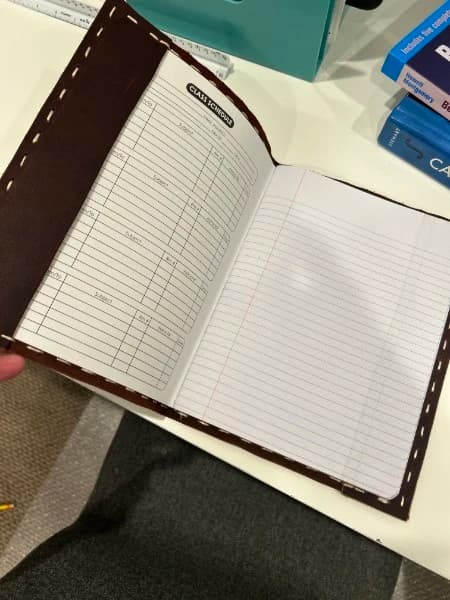
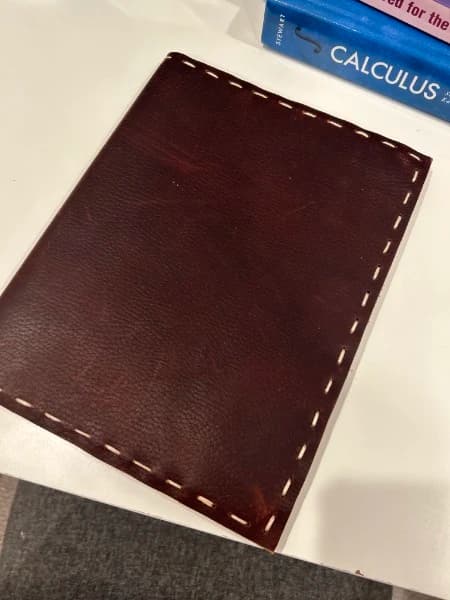
Every journal is made by hand in Saratoga Springs, Utah — genuine leather, waxed linen thread, and acid-free paper.
Shop Journals