Why Handwritten Journals Still Matter
Benjamin S. Fowler
Maker & Founder, Covenant Leather Co. · January 5, 2026 · 7 min read
We live in an age when every thought can be captured instantly, stored infinitely, and searched in seconds. Your phone knows more about your daily life than any journal ever could — your location, your photos, your messages, the music you played at midnight when you couldn't sleep.
And yet there is something the phone does not capture. Something that only happens when you sit down with paper and a pen and write.
I've been thinking about this for years — why I make leather journals, why I gave them to every missionary I sent out, why I still keep one myself despite having every digital tool available. Here is what I've come to believe.
Writing by Hand Slows You Down in the Right Way
Typing is fast. It matches the speed of thought, or close to it. That speed is useful for capturing information — notes, lists, records. But it is not always useful for processing information.
When you write by hand, you write more slowly than you think. And in that gap between thought and word, something happens. You edit. You choose. You decide what actually matters enough to write down. The very slowness of handwriting is a filter — it forces you to be selective, and in being selective, you become clear.
Research supports this. Studies at Princeton and UCLA found that students who took notes by hand retained information significantly better than those who typed, even when the typists wrote more words. The act of translating ideas into written language, rather than transcribing them verbatim, drives deeper understanding.
A Handwritten Journal Is Permanent in a Way Nothing Digital Is
I have journals from twenty years ago. I can open them right now. The paper has aged, the ink has set, and every word is exactly where I left it.
I do not have a single digital document from twenty years ago that I can open without effort or conversion. File formats change. Platforms disappear. Devices die. Cloud services shut down or change their terms. The content we pour into digital tools is, in a real sense, rented.
A physical journal, kept and cared for, is yours. It cannot be deleted by an algorithm, discontinued by a company, or lost in a server migration. It can be held by your grandchildren.
The Physical Act of Writing Is Meaningful
There is something about the physical act — pen on paper, hand moving across a page — that feels like it matters in a way that typing does not. I don't fully understand why. But I notice it every time I sit down to write.
Part of it may be the absence of distraction. A notebook does not notify you. It does not suggest other content. It does not track your reading time or offer to summarize what you've written. It is inert and patient and entirely devoted to what you put in it.
Part of it may also be the irreversibility. When you write something by hand, deleting it requires physical effort — crossing out, erasing, covering over. That friction means the words you put down feel more committed. More true.
Journals Are How We Know Who People Were
History is written in journals. Not the official history — the real history. What people ate, what they worried about, what they prayed for, what made them laugh. The texture of ordinary days.
The journals of pioneers who crossed the plains on foot, of soldiers who wrote home from impossible distances, of mothers who recorded the first words of children long grown — these documents are irreplaceable. They are the evidence that specific people existed, felt, hoped, suffered, and survived.
Your life is not less worth recording than theirs. Your ordinary days — the work, the relationships, the small graces and difficulties — are the substance of a history that your children and grandchildren will be hungry for.
The Case for Starting Now
You do not need to be a writer. You do not need to have something profound to say. You need a journal and a pen and the decision to write something — anything — before you go to sleep tonight.
The first entry is always the hardest. Write the date. Write where you are. Write what you had for dinner and what you're thinking about. That's enough. Tomorrow you'll write a little more. In a year you'll have something worth reading. In twenty years you'll have something irreplaceable.
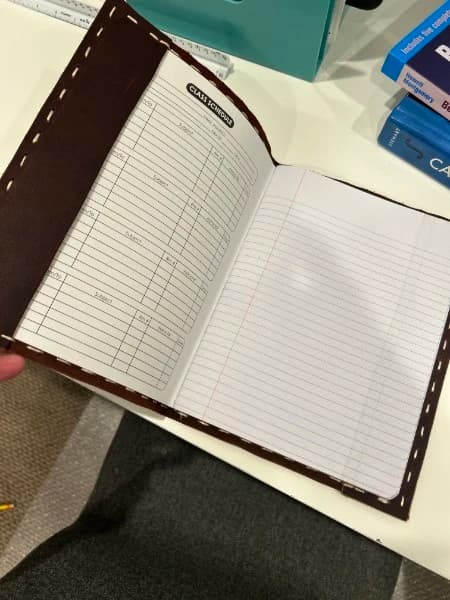
Use a journal worth keeping. The leather will soften, the pages will fill, and the record of your life will be there — held, permanent, yours.
Handmade by Benjamin S. Fowler
Find the journal that's yours.
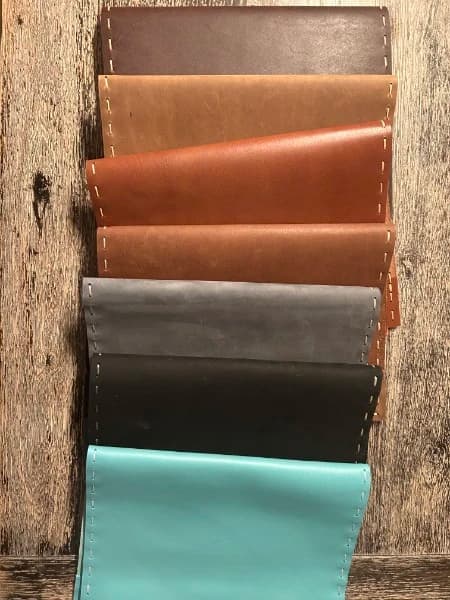
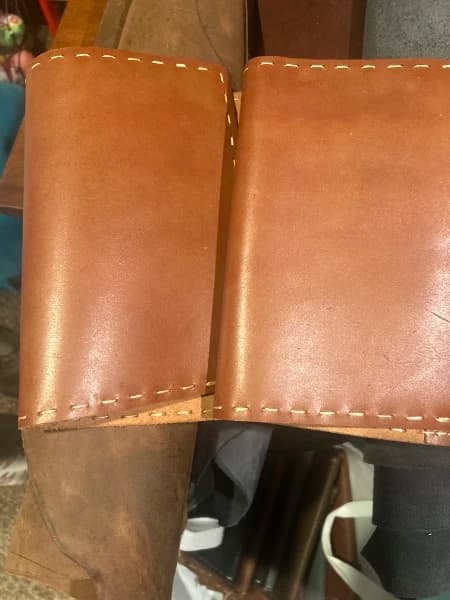
Every journal is made by hand in Saratoga Springs, Utah — genuine leather, waxed linen thread, and acid-free paper.
Shop Journals